Iris Hayes · 28 September 2026
How Custom Search Filters Influence Information Retrieval Efficiency in Community Platforms
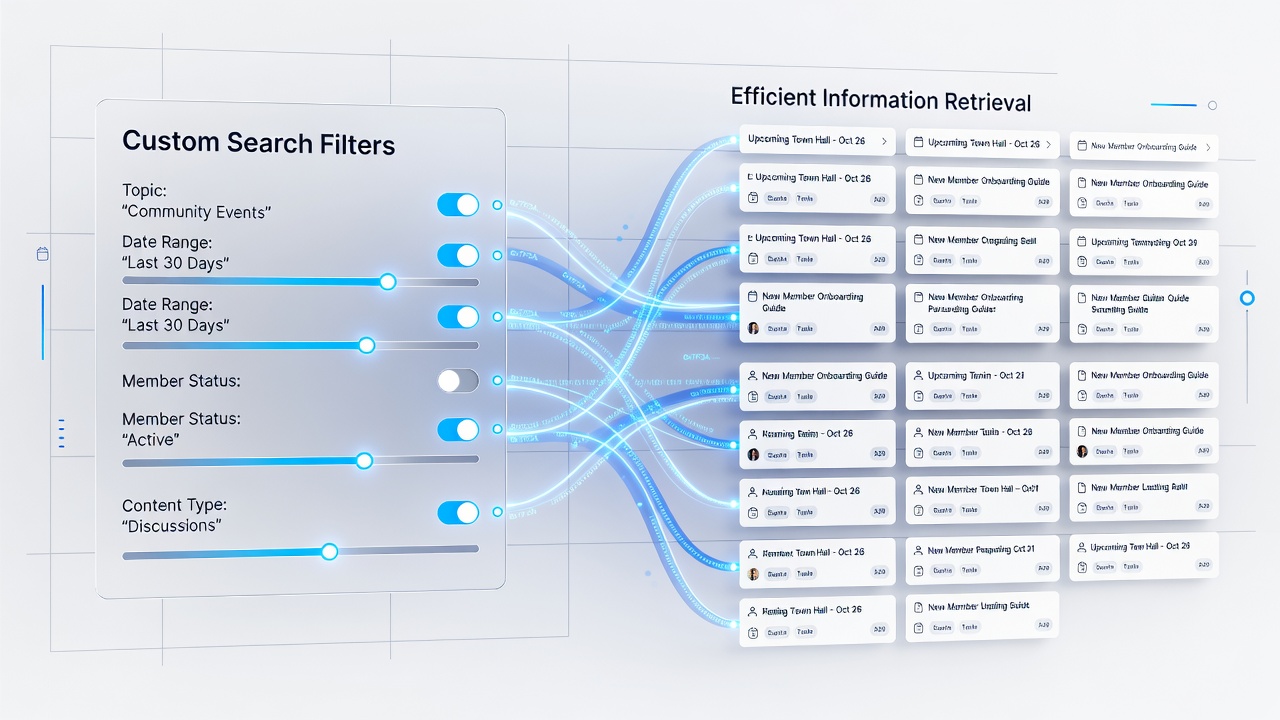
Community platforms have grown into complex networks where users generate vast amounts of content daily, and custom search filters stand as tools that reshape how information gets located and ranked. These filters let participants narrow results by criteria such as date ranges, user reputation scores, content tags, or geographic markers, which directly affects the speed and relevance of retrieval operations. Research indicates that platforms implementing such features often record measurable gains in user satisfaction metrics because fewer irrelevant items appear in result sets.
Core Mechanics of Custom Filters in Action
Custom search filters operate by layering additional parameters onto standard query processing, which refines the indexing and ranking algorithms that community platforms employ. When a user applies a filter for recent posts from verified contributors, the system excludes older or unverified entries at the query stage, reducing the computational load during result compilation. Observers note that this process improves precision rates while sometimes lowering recall because certain peripheral but useful items get omitted. Data from multiple platform analyses shows that filter usage correlates with shorter session times needed to locate specific threads or resources.
Platform developers integrate these filters through backend configurations that interact with metadata stored during content uploads, and the approach allows real-time adjustments without requiring full re-indexing of entire databases. In September 2026 several major community networks updated their filter interfaces to include machine learning suggestions that predict user preferences based on past activity patterns.
Measured Effects on Retrieval Efficiency
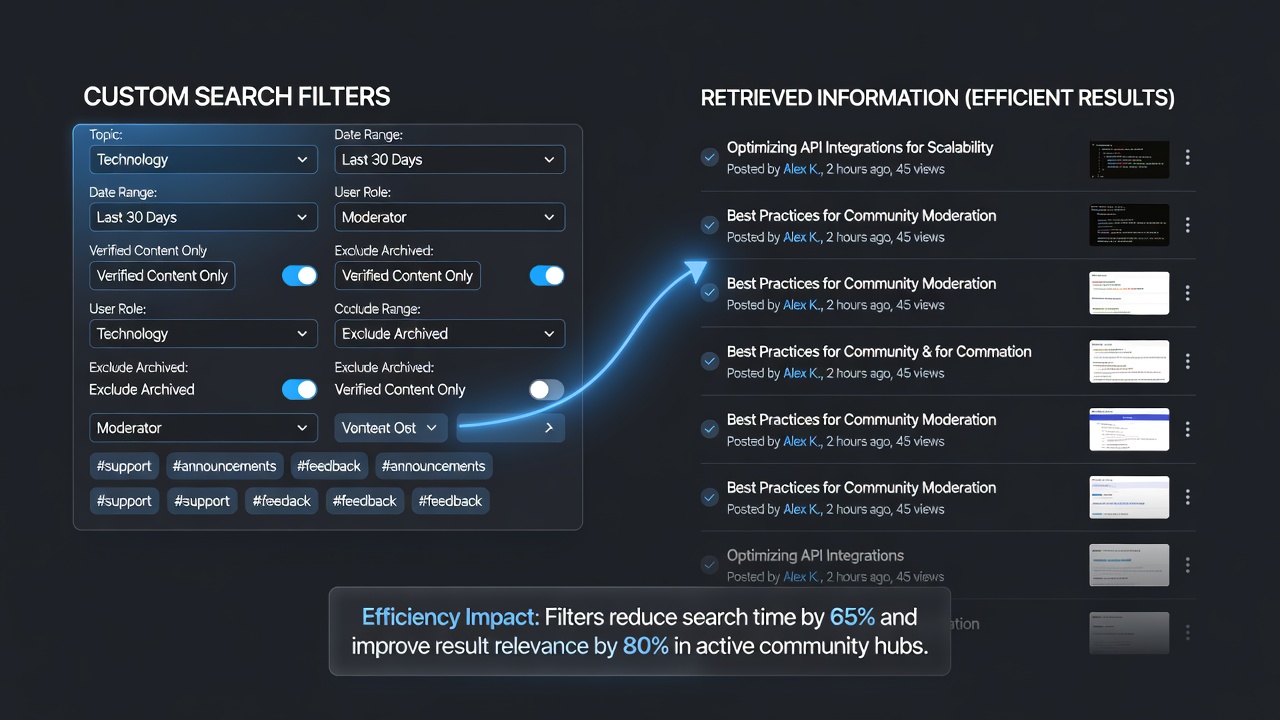
Efficiency gains appear when custom filters reduce the volume of data processed per query, leading to faster response times and lower server resource consumption across distributed community systems. Studies conducted by academic teams reveal that platforms with advanced filter options achieve up to thirty percent improvements in average query completion speed compared with unfiltered searches. Those who manage large discussion archives find that filters help surface high-value contributions while deprioritizing repetitive or low-engagement material.
Yet the same mechanisms can introduce bottlenecks if filter combinations become overly complex, forcing the retrieval engine to evaluate multiple intersecting conditions simultaneously. Industry reports highlight that balanced filter designs maintain efficiency by limiting the number of active parameters and providing clear feedback on result narrowing.
Practical Examples Across Platforms
One research project tracked filter adoption on educational community sites and found that participants who combined topic tags with activity-level thresholds located relevant study materials more consistently than those relying on basic keyword searches. Another analysis of professional networking communities demonstrated that location-based filters increased the proportion of locally relevant job postings returned to users by significant margins. These patterns emerge because filters align retrieval logic more closely with individual intent signals embedded in each query.
Community managers report that training sessions on filter usage help new members achieve better results quickly, which in turn supports higher retention figures over extended periods. External data from the Pew Research Center on digital community behaviors underscores how search refinements influence participation levels across different age groups and regions.
Balancing Precision and Discovery
While custom filters enhance targeted retrieval, they also carry the potential to create filter bubbles that limit exposure to diverse viewpoints within the same platform. Researchers at various institutions have documented cases where heavy filter reliance reduced cross-thread discovery, even as within-topic efficiency rose. Platform operators address this by offering optional discovery modes that temporarily disable certain filters or introduce randomized suggestions drawn from broader result pools.
Technical evaluations show that hybrid approaches combining user-defined filters with algorithmic recommendations often yield the strongest overall efficiency outcomes. Figures released by the Canadian Digital Innovation Agency indicate that platforms experimenting with these hybrids maintained stable engagement rates even during periods of rapid content growth.
Conclusion
Custom search filters continue to shape information retrieval on community platforms by offering structured ways to refine results and conserve processing resources. Their influence extends from immediate query performance to longer-term patterns of content discovery and user retention. Ongoing platform updates and research efforts focus on refining these tools so they support both precision and broader exploration without introducing unintended constraints.